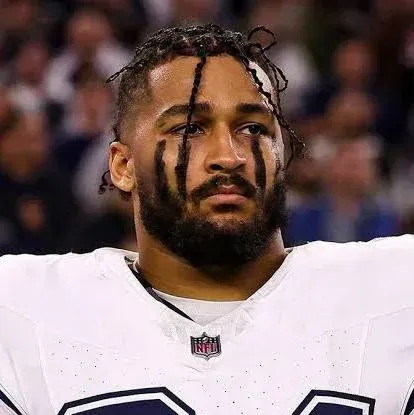
When the Headlines Hurt: What the Dallas Cowboys Tragedy Teaches Sports Moms About Mental Health
A few weeks ago, I did what most sports moms do: picked up my phone, checked scores, and scrolled through NFL news while juggling a thousand other things.
And there it was.
Another headline about a young player gone far too soon.
Dallas Cowboys defensive end Marshawn Kneeland, just 24 years old, dead from an apparent suicide. Days after scoring his first NFL touchdown on Monday Night Football. A kid living the “dream” every little boy in pads talks about.

I’m a football mom. I’ve sat in high school bleachers, college stadiums, and NFL stands with my heart in my throat. So news like this doesn’t feel like “NFL news” to me.
It feels like a warning bell for every sports parent.
This isn’t a Cowboys story. This is a sports family story.
And if you’re reading this on Mama Hen’s Playbook, I’m going to talk to you the way I’d talk to another mom in the stands:
We cannot keep treating our kids’ mental health like an optional extra in a world that demands constant performance.
Behind the Helmet Is Somebody’s Baby
On game day, all we see is the surface:
The big contract
The TV cameras
The social media love
The highlight clips on repeat
What we don’t see is what that player is carrying in their heart.
Marshawn had lost his mom last year and wore her ashes in a necklace close to his chest. People.com Think about that for a second — a grown man on the field, still somebody’s child, literally carrying his mother with him while he chased his dream.
Tell me that doesn’t sound like half the boys we know:
Trying to make everybody proud. Trying to be “strong.” Trying to live up to the story people tell about them.
As sports moms, we forget this sometimes. We get caught up too:
“Did you email that coach back?”
“You need to hit the gym harder.”
“If you want that scholarship, you can’t slack.”
Not because we’re cruel. Because we’re scared. We see how tight the window is — for scholarships, for playing time, for getting noticed.
But here’s the hard truth:
If our kids succeed on the field and collapse on the inside, that is not success.

The Weight of “Living the Dream”
From the outside, going D1 or going pro looks like pure glory.
From the inside? It can feel like:
Every mistake is public
Every performance is tied to your worth
Every injury threatens your entire future
Add in:
Family expectations
Social media pressure
NIL, money talk, agents, recruiting
Grief, relationships, and regular life on top of it
…and you’ve got a perfect storm.
When I look at situations like Marshawn’s, I don’t see a “story.” I see a pattern:
Kids carrying adult-sized pressure with child-sized emotional tools unless we teach them otherwise.
This is where we, as parents, come in.
Not as cheerleaders. Not as critics. As protectors.
Signs We Might Be Missing
I’m not here to diagnose anybody. But I am here to be honest about the things we brush off because “he’s just tired,” or “she’s just stressed about finals.”
If you start seeing patterns like:
Your athlete suddenly pulling away from family or friends
Big mood swings that don’t match what’s happening on the surface
Snapping over small things, then shutting down
A kid who used to love their sport now saying, “I don’t even care anymore”
Changes in sleep, appetite, or hygiene
More “I’m fine” with dead eyes
…your mom radar is going off for a reason.
And if they ever say things like:
“It doesn’t matter anyway.”
“Everybody would be better off without me.”
“I’m just tired of all of this.”
That is not drama. That is not “being emotional.” That is a red flag.
We don’t need to panic. But we absolutely cannot ignore it.

Conversations We Have to Start Having
Here’s where it gets uncomfortable.
A lot of us were raised in homes where:
“You’re fine. Toughen up.”
“We don’t talk about our business outside this house.”
“Therapy is for people who can’t handle their life.”
That mindset doesn’t work in 2025. It never did. It just hid a lot of pain.
So here are some conversations we need to be having with our athletes — yes, even if they roll their eyes:
1. Your worth is not your stat line.
“I love you if you have 3 sacks or zero. I love you if you drop the game-winner or catch it. You are bigger than your sport.”
2. Feeling overwhelmed doesn’t make you weak.
“If you feel like it’s too much, that doesn’t mean you’re failing. That means you’re human.”
3. Help is normal. Help is allowed.
“Strong people ask for help. You don’t wait until your knee is shattered to see a doctor. Don’t wait until your thoughts are shattered either.”
4. No game, no scholarship, no dream is worth your life.
“Even if football or basketball disappeared tomorrow, I would still need you here. Alive. That’s the non-negotiable.”
Say these things out loud. Repeatedly. Not when there’s a crisis — now.

Building a Real Support System (Not Just Saying “I’m Here if You Need Me”)
Telling our kids “you can talk to me” is a start. But in this world? It’s not enough.
Think about creating an actual support net around them:
A sports counselor or therapist who understands athletes
A trusted position coach or trainer they can be honest with
Maybe a former player who’s willing to tell the truth about the pressures and the downside
A healthy circle of friends who aren’t just there when they’re winning
If your child is in high school or college, find out:
Does the school have mental health services?
Do the coaches openly support using them? Or do they send mixed messages like, “Yeah, use the resources… but don’t let it ‘distract’ from ball”?
And here’s your permission slip, mama:
If a coach or program acts like mental health is a weakness, you’re allowed to push back. Ask questions. Make noise. Be “that mom.”
I’d rather be “that mom” with a living, breathing kid than a quiet mom planning a funeral.
For My Fellow Sports Moms: You Can’t Carry It All, But You’re Not Powerless
Let’s be real.
We cannot:
Control our kids’ choices
Monitor every thought they have
Bubble-wrap them from pain
But we can:
Create a home where it’s safe to say, “I’m not okay.”
Stop talking about their sport like their whole identity lives there.
Watch the signs and act early, not after a crisis.
Normalize therapy, counseling, support groups — whatever helps.
And we can do one more huge thing:
Take care of our own mental health.
Our kids are watching us. If all they see is us stuffing our feelings, running ourselves into the ground, never asking for help, they learn the same thing.
Model what you want them to do.

If the Headlines Hit You Hard Too…
When I see stories like Marshawn Kneeland’s, I don’t just scroll past. I pause. I pray. I cry a little. Then I check in on my people.
If this kind of news hits you like a punch to the gut, you’re not alone.
If you or someone you love is struggling with thoughts of self-harm or suicide, in the U.S. you can call or text 988 for the Suicide & Crisis Lifeline any time.
That’s not weakness. That’s staying here long enough to see a better chapter.
The Heart of Mama Hen’s Playbook
At the end of the day, this blog isn’t about drills, camps, and highlight reels.
It’s about this:
Raising whole, healthy humans who happen to be athletes — not athletes who are expected to act like machines.
The headlines will keep coming. Big games. Big plays. Big contracts. Big tragedies.
We can’t control the NFL.
But we can change what happens in our homes, our cars, our conversations.
Your child’s mind, heart, and spirit are not extras. They are the main thing.
Let the world obsess over stats.
We’ll obsess over keeping our babies alive, grounded, and loved — on and off the field.
That’s the real playbook.
