
“Bby, These Colleges Are Not Playing With You”
If you’ve been scrolling recruiting TikTok, you’ve probably seen the clips: coaches talking about “grown men” walking into college programs and high school kids getting left behind. When I say colleges aren’t playing with you, I mean they are recruiting older, stronger, more polished athletes who can help them win today, not three seasons from now. Your 16‑year‑old may technically be “on track,” but on the recruiting board they might be two full years behind the competition physically, mentally, and academically.

This is where reclassification comes in. Reclass isn’t about “holding your kid back” just to dominate little kids; it’s about aligning your athlete’s development with the reality of today’s recruiting landscape. It’s a strategic reset that can give them time to grow into the body, the game IQ, and the transcript that college coaches expect.
What Reclassification Really Means
Reclassification simply means changing your athlete’s expected graduation year so they have an extra year of development before hitting the college level. Sometimes it’s done going into high school, sometimes via prep school or an extra postgraduate year, and sometimes by moving from traditional to alternative school structures that allow a reset. Whatever the path, the heart of it is time: time to grow, time to mature, time to be seen.
It is not a magic “D1 button.” Reclass without a plan is just an extra bill and an extra birthday. But when it is paired with a clear training schedule, a recruiting strategy, and honest evaluation, reclass can give your athlete a fair shot in a marketplace that is already skewed older.
Why So Many College Athletes Are Older Now
Look at the average age of impact freshmen and transfers in big‑time college programs, and you’ll see a pattern: the portal and COVID years created rosters full of 21‑, 22‑, and even 23‑year‑olds still playing college ball. Coaches are used to coaching fully grown bodies, not 17‑year‑olds who still look like they just got out of JV tryouts. So when your baby walks into that gym at 17 and a half and the guy they’re competing with is 20 with a college strength program behind him, it’s not really a fair fight.

That gap is not just size; it’s confidence, game reps, and emotional maturity. Older athletes have been cut, coached hard, lived away from home, and learned how to handle adult responsibilities. When colleges pick between a kid who “might be ready in two years” and a grown athlete who can help in November, they choose the latter almost every time.
Signs Your Athlete Might Need to Reclass
Not every athlete needs to reclass, but there are some clear red flags that suggest you should at least have the conversation.
They are chronologically young for their grade (summer or late‑year birthday) and consistently competing against kids almost a full year older.
Their body has not caught up yet—still clearly developing physically compared to peers at showcases or elite camps.
Their skill and IQ are improving, but they don’t yet “pop” at the level they say they’re aiming for (D1, D2, top JUCO, etc.).
The transcript is messy: missing NCAA core classes, GPA not aligned with target schools, or standardized tests not yet where they need to be.
Coaches are interested but keep using language like “needs time,” “not quite ready,” or “keep us updated in a year.”
If you see more than two of these in your situation, reclassification can stop being an emotional decision and become a strategic one.
The MamaHen Playbook: How to Approach Reclass
Youth sports camp and league schedule calendar table
You cannot reclass off vibes. You need a plan.
Get an honest evaluation
Talk to coaches who are not just trying to keep your kid on their roster: skills trainers, trusted high school or club coaches, and college coaches willing to give real feedback. Ask, “If my child stays in their current class, where do you realistically see them landing?”Audit the academics
Pull the transcript, look up NCAA core requirements, and map out what’s missing. Make sure any reclass pathway still leads to eligibility—no point in having the body and game if the clearinghouse says no.Choose the right environment
Reclass through a program that actually develops kids, not one that just sells extra exposure. You need a coaching staff with a track record of placing players where they belong, not just talking about who walked through the gym once.Build a real 12‑ to 18‑month plan
Block out the calendar: skill work blocks, strength and conditioning cycles, academic checkpoints, tournaments, camps, and key recruiting windows. Treat this year like a startup—time, money, and energy must all be invested on purpose, not out of panic.
The Emotional Side: For Mamas in the Stands
Let’s be honest: reclass is not just an athletic decision; it’s a heart decision. You may have dreamed of seeing your baby graduate with their class, walk the stage with the kids they grew up with, and move on “on time.” When we start talking about reclassification, it can feel like failure, or like you are admitting they weren’t “good enough” the first time.
But in this era, being “on time” looks different than when we were in school. Many of these college freshmen have already had a redshirt year, a prep year, or a transfer year baked into their journey. You are not breaking your child; you are buying them breathing room in a system that is not built with your baby in mind. Give yourself permission to grieve the picture you had in your head and then get locked in on the future your athlete is actually chasing.
Common Myths About Reclassification
There is a lot of noise around reclass—here are some myths I hear all the time and what’s actually true.
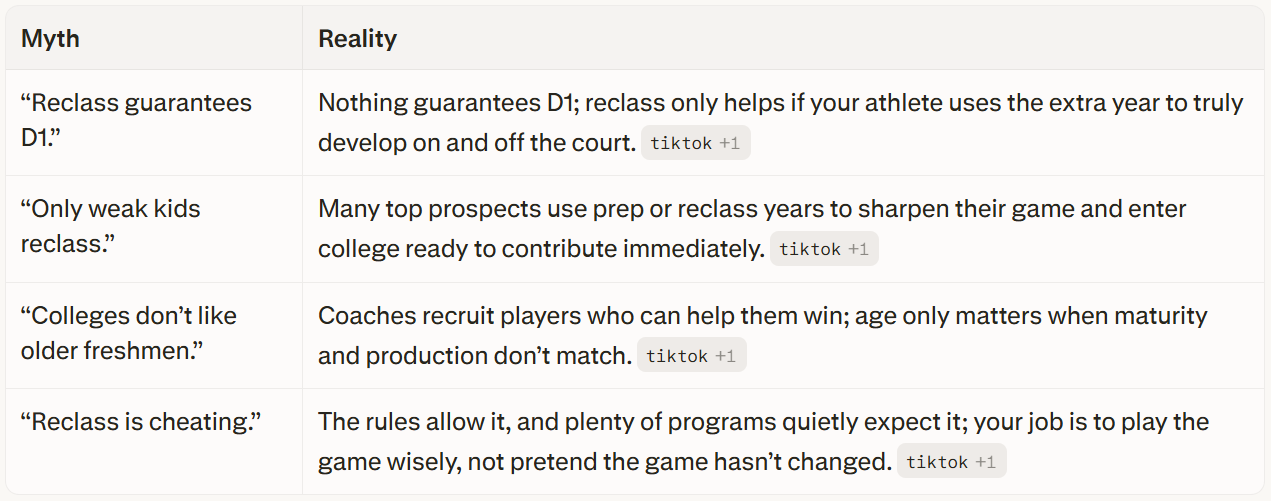
Once you strip away the myths, you’re left with one core question: does reclassification give your child a better chance to become who they say they want to be?

How to Talk About Reclass With Your Athlete
Please don’t just walk in the room and say, “We’re holding you back.” Language matters. Sit down with your athlete and frame this as opportunity, not punishment.
Start with their dream: “You keep telling me you want to play college ball. Let’s talk about what that really looks like now.”
Share what you’ve learned: how old many freshmen are, what coaches are saying, what the recruiting timelines look like.
Ask for their input: “If another year could help you walk into college ready to play, how would you feel about that?”
Be honest about sacrifice: another year means more work, delayed milestones, and staying locked in when friends may be moving on.
You want your athlete to feel empowered, not dragged. When they buy in, the reclass year becomes a launchpad instead of a timeout.
Your Next Step: Don’t Do This Alone
The worst thing you can do is try to navigate reclassification, recruiting, NIL, and mental health in isolation. This system is complicated on purpose. You need a village that understands transcripts and transfer rules, highlight reels and Hud1 links, unofficial visits and ACT scores.
That’s why the MamaHen community exists—to give you a playbook, a prayer circle, and a group of parents who are walking this exact same road. If you’re even thinking about reclassification, or you just need help figuring out where your athlete truly stands, this is your invitation.
Call to action: Join the MamaHen community at https://mamahen.app.clientclub.net/ to stay up on the latest news and strategies to get your student‑athlete to the next level.


